
Please select an option
Contemporary Medical Acupuncture & Dry Needling
Ready to book? Jump to booking ↓
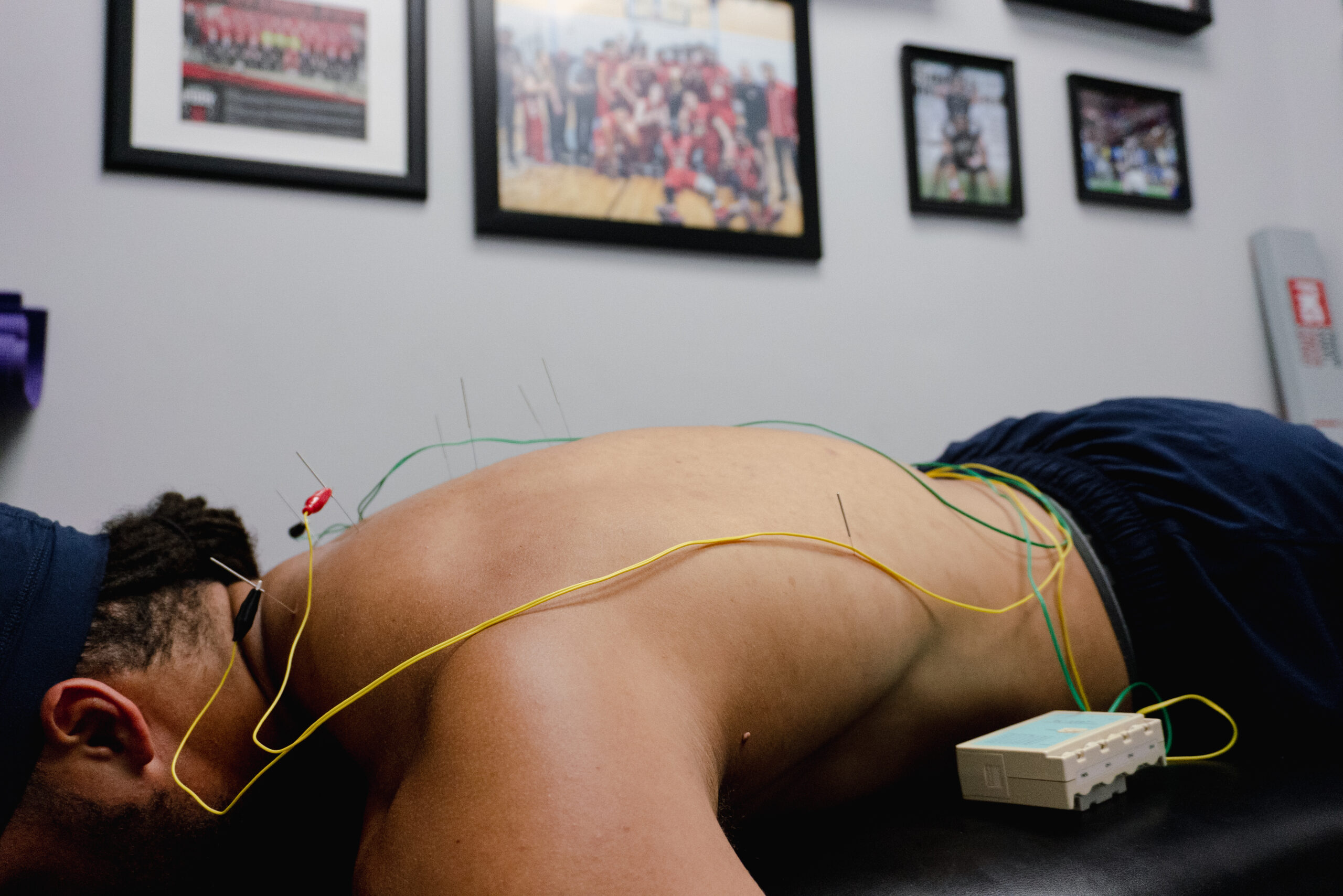
Contemporary Medical Acupuncture (CMA) is a precise peripheral nerve stimulation technique, in which fine solid needles (acupuncture needles) are inserted into anatomically defined neurofunctional sites, and stimulated manually or with electricity for the therapeutic purpose of modulating abnormal activity of the nervous system and/or the endocrine, exocrine and immune systems, in pain syndromes, functional problems, and any diseases in which these modulatory mechanisms are available. Neuromodulation occurs through neurological and neurohumoral mechanisms at multiple levels, namely: peripheral nerves, spinal cord, brain stem, brain and cerebellum.
CMA is mechanism-based, not disease-based. Therapeutic goals and treatment targets are selected based on the identified neurological dysfunctions contributing to the clinical presentation of the symptoms. Sometimes CMA treatments result in transient amelioration or disappearance of the symptoms, and other times results in permanent resolution of the dysfunction, especially when dysregulation of the nervous system was the underlying pathophysiological mechanism.
Dry needling is a targeted technique used by our physiotherapists to release tight muscles and trigger points. It involves inserting a very thin, solid needle into affected muscles to elicit a ‘twitch response,’ which helps reset muscle function and reduce pain. While the procedure involves no injections and minimal discomfort, it can be highly effective for relieving both acute and chronic pain, supporting recovery, and improving movement.
Most Common conditions treated include:
- Low Back Pain
- Neck Pain
- Sprains & Strains
- Tendinitis & Tendinosis
- Ligament Injuries
- Joint Pain
- Plantar Fasciitis
- Sports Injuries
- Rotator Cuff Injuries
- Whiplash
- Sciatica
- Disc herniations/bulges
Covered by
- Covered by private insurance plans
- Payment required
Book your visit
Acupuncture and dry needling in Gloucester, Ottawa
Get care from our team at our Gloucester clinic in Ottawa’s east end, a short drive from Orléans, Beacon Hill, Blackburn Hamlet and Rothwell Heights.
📍 5-5303 Canotek Rd, Gloucester
Mon–Thu 7am–8pm · Fri 7am–5pm · Sat 9am–2pm
Common questions
Is dry needling the same as acupuncture?
No. They use the same thin, sterile needles, but they come from different approaches.
Read the full answer →Does dry needling hurt, and what are the side effects?
Most people feel little when the needle goes in, then a brief muscle twitch or deep, cramp-like ache when it reaches a tight spot. That lasts a few seconds. The most common side effect is muscle soreness for about a day afterward.
Read the full answer →Is acupuncture or dry needling covered by insurance?
OHIP does not cover acupuncture or dry needling at a private clinic. With extended health benefits, coverage usually depends on who provides it: at our clinic, needling is done by our physiotherapists and chiropractors as part of your treatment, so check how your plan handles that.
Read the full answer →Should I see a physiotherapist, a chiropractor or a massage therapist?
All three treat pain and injuries of muscles and joints, and there is a lot of overlap. If you are unsure, book an assessment with a physiotherapist or chiropractor. They will tell you if someone else on the team is a better fit.
Read the full answer →How do I book at Performance Sports Therapy (Jane App online booking)?
There are three ways to book.
Read the full answer →Why is one of my hips higher than the other?
A hip that sits higher on one side is often due to muscle tightness or imbalance, the way you stand, or a slight difference in leg length. Small differences are common and not always a problem. If it comes with pain or affects how you move, a chiropractor or physiotherapist can assess it.
Read the full answer →Why does my mid-back feel stiff when I hold my breath or brace?
Holding your breath or bracing, for example during heavy lifts, pushes pressure into your trunk and ribs. If the joints of the mid-back and ribs are already stiff or the surrounding muscles are tight, that pressure can feel uncomfortable. It is usually mechanical and often responds well to mobility work and treatment.
Read the full answer →Dry needling vs acupuncture for muscle knots: which is better?
Both use thin, sterile needles. Dry needling targets tight, tender spots in muscle (often called knots or trigger points) based on modern anatomy, while traditional acupuncture is based on meridian points. For muscle knots, dry needling is usually the more direct option, and contemporary medical acupuncture blends both approaches.
Read the full answer →
Learn more about our practitioners
How can we help?
Ask a Question
Book an Appointment
Career Inquiry
Hours & Location
5-5303 Canotek Rd, Gloucester, ON
Monday - Thursday
7:00AM - 8:00PM
Friday
7:00AM - 5:00PM
Saturday
9:00AM - 2:00PM
Sundays and holidays
CLOSED
Successfully submitted!
thank you for your inquiry. One of the PST staff will
reach out to you shortly.